Journey of a Cybersecurity Expert & Ethical Hacker
In the modern and ever-changing digital environment, cybersecurity has become an essential field in the world. As technology usage grows in society, so do risks in terms of cyber threats, hacking attempts, data breaches, and online frauds. People, organizations, and even governments look for ways to protect their digital presence in society. In this sense, cybersecurity experts play an important role in building a secure digital environment that users can trust. My personal journey as an ethical hacker and cybersecurity expert was driven by this idea: contributing to the creation of a secure digital environment.
From an early stage in my life, I have been aware of the fact that my interest in technology has been different from that of most of my peers. For instance, while most of them have been using technology in a superficial way, such as using smartphones, accessing the internet, and engaging in various forms of social media, I have been driven by the need to understand the mechanisms of technology. For instance, I have been driven by the need to understand how websites are developed, how servers interact with each other, and, most fundamentally, how these technologies are secured. This was not just a fleeting interest but rather developed into a lifelong quest for knowledge, which ultimately led to the field of cybersecurity.
My introduction to ethical hacking began at a relatively early stage in my development. At a point in life where many people are still in the process of discovering their interests and passions, I began to study the vulnerabilities of systems and the process of cyberattacks. The focus of my study was concentrated around the fundamental concepts of cybersecurity, including network security, system vulnerabilities, and penetration testing. As I continued to learn more about the process, I began to clarify the way in which attackers utilize the system vulnerabilities and the way in which they could be identified and addressed. A defining moment in my early development came in the form of the choice that I made to pursue the route of ethical hacking. Rather than using the knowledge and skills that I had developed for negative purposes, I chose to utilize them in a positive way, helping people and organizations to protect themselves against attacks.
With my progression in my professional path, I have continued to expand my knowledge base in various fields within the realm of cybersecurity. This included the pursuit of knowledge in the field of web application security, vulnerability assessments, ethical hacking techniques, and cyber threats. Again, there was a focus on learning through practice, given the importance of learning in the real world. I have been able to develop the ability to effectively learn how to analyse a system, identify the risks, and develop appropriate measures to mitigate those risks.
As I continued to gain more experience, I was able to apply my knowledge in real-world situations. I was actively engaged in identifying security threats, contributing to the solution of security issues related to cybersecurity, and offering guidance on how to approach security in digital situations. As I continued to gain more experience in analysing complex situations and identifying potential security threats, I was recognized in the cybersecurity field. This was an important part of my professional development and helped me gain more confidence in handling real-world problems.
In order to expand my impact and reach a wider audience,
I founded Selkey Cyber Security Pvt Ltd.
The aim through this platform was to offer structured cybersecurity solutions, promote ethical hacking practices, and assist people and organizations in developing more effective cybersecurity strategies. Establishing this platform enabled me to organize my knowledge and experience in a manner that could be more impactful on a wider audience. My aim was to develop a digital environment where people could utilize technology without fear.
Aside from my professional role, I argue that awareness represents a highly influential tool for the prevention of cybercrime. A huge percentage of cybercrimes does not result from sophisticated cyberattacks, but rather from a lack of user awareness. In this context, I have actively participated in enhancing user awareness with regard to cybersecurity through the Selkey NGO.
The goal of my efforts is to empower users, be it students, professionals, or simply citizens, through a series of workshops, seminars, and awareness programs with regard to cybersecurity. The goal is not simply to raise users’ awareness, but to empower users with regard to their own protection within the digital world.
In addition to this, I am also highly committed to developing the next generation of cybersecurity experts. I provide training sessions, workshops, and mentorship to young and aspiring ethical hackers. My teaching philosophy goes beyond mere knowledge and skill acquisition in this field; I also focus on the ethical and appropriate use of this knowledge. I firmly believe that knowledge in this field must be used to harm and not to heal. From all my experiences, I hope to assist students and professionals in developing a foundational knowledge base in this field and to pursue it as a career.
One of the major factors that have influenced my professional path is my mindset. Cybersecurity is a dynamic field where new challenges are emerging every day. To remain relevant in the field, it is essential to keep learning. I always emphasize the importance of staying up to date with the latest trends and technologies in the cybersecurity domain. My inspiration is driven by curiosity, discipline, and a commitment to ethics. To me, ethical hacking is more than just finding vulnerabilities; it is protecting people, building trust, and creating a safer cyber world.
Looking forward, the aim is to continue further contributions to the field of cybersecurity. This includes broadening the reach through awareness, creating advanced security measures, and training more people to become competent ethical hackers. With technology advancing further, there will also be a growing need for cybersecurity, and the aim is to take part in this evolution. The end goal is to create a digital world where people are not only protected but also aware of how to protect themselves.
Throughout my experience in cybersecurity, the guiding principles have been inquiry, learning, and a strong feeling of responsibility. From initial exploration and discovery of technology to creating a professional presence within the cybersecurity domain, every step has offered instructional learnings. It is my belief that success in cybersecurity is not just about having the requisite skill set, but about leveraging the skill set to produce a positive effect. For those looking to pursue a career in cybersecurity, my experience has taught me that it is possible to build a meaningful and impactful presence in the field.
For a cybersecurity domain, it can be stated that day-to-day conditions are varied and non-identical. Each day brings its own set of challenges and opportunities for further learning. One of the common questions would be about the nature of a typical day for a cybersecurity expert. The answer would be that there is no particular pattern, but over a period of time, I, Dhruvesh Panchal, have developed a methodology for productivity and focus in this dynamic domain.
My day starts early. I strongly believe that the start to a day determines the nature and pace of all activities that follow. I choose to start my day with a clear mind, without immediately engaging myself in any activity or distraction. This time helps me to mentally prepare for the day that is to come. Starting a day with a clear mind is important, especially for a domain such as cybersecurity, where concentration is required.
Another one of my initial practices is to stay abreast of the latest developments in the world of cybersecurity. Due to the fast-paced nature of this industry, it is vital to stay informed about what is happening on a global scale, especially with regard to emerging vulnerabilities, new types of attacks and novel forms of cybersecurity. One must develop the discipline to read articles about what is going on in the world of cybersecurity.
Subsequently, I move on to carry out my core professional activities. This segment of the day is dedicated to carrying out activities related to cybersecurity, which may include analysis, identification or even the exploration of various security concerns. Each task demands high levels of concentration and a problem-solving approach. Each problem is addressed with scholarly interest and my objective is to comprehend not only the problem itself but also the rationale for the problem.
A considerable part of my daily routine involves constant education. Despite how experienced one might be, there are always new developments in cybersecurity. I dedicate time each day to studying, whether it be exploring a newly introduced tool, explaining a concept I am unfamiliar with or practicing various techniques. I believe this constant education has been one of the major contributors to my growth. I do not consider learning a separate activity; rather, I consider it a part of my daily routine.
Practice is another key component of my daily routine. Ethical hacking is a skill set and it is improved upon through practice. I make sure I practice different scenarios, which in turn increases my knowledge in the real world. I have noticed that the only way knowledge can be turned into expertise is through practice.
In order to expand my impact and reach a wider audience, I founded Selkey Cyber Security Pvt Ltd.
Effective time management is an important part of my daily routine. Since I have a variety of tasks, it can be difficult to stay focused and avoid distractions. However, I prioritize tasks and try to focus on those that are most important. This helps me avoid unnecessary distractions and stay disciplined, thereby ensuring proper time management.
Besides my technical contributions, I am dedicated to the dissemination of knowledge. Through interactions like workshops, seminars and others, I remain dedicated to giving back to my community. The process of giving back to others through teachings and mentorship not only helps them advance, but it also helps me advance my own knowledge. The process of communicating ideas in an easy-to-understand manner requires precision and this process helps me advance my own knowledge.
Another important element that is a part of my routine is ensuring that the right mental state is achieved. It is a highly stressful domain, especially when dealing with complex issues. It is important to ensure that one remains calm and patient. Thus, a balanced mental state is as important as possessing the right skillset for this particular domain.
Physical and mental well-being are part of my daily routines. It is tiring to be exposed to screen time for an extended period. I address this by taking care of my health through regular breaks, exercise and rest. These small actions help me stay energized throughout my day.
At the end of the day, I practice self-reflection. During this time, I evaluate my learning, my achievements and my areas of improvement. This self-reflection ensures that I am aware of my progress and helps me to better plan for the next day. This practice also gives me a sense of direction and purpose.
One thing that was realized over the course of time is that being consistent is more important than being intense. There is no need to complete all the tasks at the same time, but consistent efforts are required on a daily basis. The efforts, although small, add up to give significant results.
For individuals seeking a career in the field of cybersecurity, a well-structured routine may prove to be a significant performance booster. This is because a routine helps an individual focus, manage time and continue to improve professionally. However, at the same time, one must also be flexible, especially because the field is constantly changing.
While my daily routine includes activities beyond just work, they are centred around growth, learning and improvement. Similarly, while cybersecurity is a career for me, it is also a path that changes and evolves over time.
To become an ethical hacker, one must move beyond the knowledge of a limited set of tools or techniques, but rather develop a holistic mindset, create a strong skill set and gain a comprehensive understanding of the operational dynamics of computing systems. While commencing one’s journey in the domain of cybersecurity, it may not be clear what specific set of skills an individual must possess in order to become an effective ethical hacker. Instead, one discovers what these are through the process of exploration, experimentation and experience. Currently, I, Dhruvesh Panchal, plan to specify the set of skills which I believe are critical in helping an individual become a successful ethical hacker.
The first and most important competency to understand and master is curiosity. Before one even begins to delve into technical matters, one has to first cultivate a mindset that embodies inquiry and questions. Ethical hacking begins with questions of how and why. How does a certain system operate? Why does a certain vulnerability exist? Without a sense of curiosity, one can never hope to reach a certain depth in terms of mastering and comprehending matters related to cyber security. For me, curiosity has been the main driving force behind learning and discovering areas often ignored by others.
The second important skill is a strong understanding of computer networks. It is important to note that cybersecurity is, in itself, closely related to the nature of communication within computer systems. It is important to have a basic understanding of concepts such as IP addresses, DNS, HTTP/HTTPS and firewalls. While computer networks may appear to be a complex concept, the underlying concepts make subsequent concepts of cybersecurity easy to comprehend. The concept of computer networks was a turning point for me.
Another important skill to learn is basic programming skills. You do not necessarily need to be a programmer, but having a basic idea of programming languages like Python, JavaScript or even scripting can make a huge difference. Programming helps automate, understand vulnerabilities, and even create your own tools. When I first started learning programming, it helped me think logically and solve problems in a more structured manner.
In addition to programming, the operating system is also very important. As an ethical hacker, you will be working with different operating systems, especially Linux-based ones. Understanding the concept and the way an operating system works, as well as the way the system handles files, is very advantageous. I spent a lot of time working with different operating systems and this helped me feel comfortable while working with them.
In order to expand my impact and reach a wider audience, I founded Selkey Cyber Security Pvt Ltd.
Ethical hacking skills include web application security. The majority of the modern digital world is based on web applications and as such, they are often the primary target for cyber attacks. You need to have an idea of the construction of websites, the security mechanisms behind the login process and the potential security issues, such as SQL injection and cross-site scripting. In my case, the knowledge of web security helped me grasp the practical scenarios and the ways to avoid them.
Another skill to learn is problem-solving. Ethical hacking is not about using the correct procedure; it is about being creative. Every system is unique and each vulnerability is unique. You need to analyze the situation, try different things and find solutions. This skill is developed over time. I learned that sometimes the best solution comes when trying different things and not being too quick to give up.
Patience and persistence are also important skills in this field. There were many times when I spent hours trying to understand a problem or find a vulnerability without success. However, in ethical hacking, patience is a vital skill. You might not find everything right away and that’s perfectly fine. The important thing is to keep trying, keep learning and keep improving. Patience, after a while, turns into expertise.
The next skill that many people do not take into account is learning continuously. You see, the field of cybersecurity is changing every day. New vulnerabilities, new tools and new ways of attacking are being developed every day. If you do not learn continuously, you will be out of date. I developed a habit of keeping myself updated and learning new tools and new knowledge.
Equally important is the need to have a strong ethical mindset. The reason is that, as an ethical hacker, you are privy to sensitive information and systems. The question, however, is whether you are using the knowledge properly. From the very beginning, I was very clear in my mind that my intention was to protect and not to exploit. Ethics is what makes an ethical hacker and a cybercriminal different. Regardless of the level of expertise you acquire, ethics is what makes you who you are.
Another important skill is communication. The ability to explain technical issues in simple terms is crucial, especially if you are working with others or clients. There is a possibility of identifying vulnerabilities, but if you cannot communicate them effectively, you reduce your impact. I have been working on my communication skills to be able to effectively share my findings with others.
Lastly, the most powerful skill is the hands-on practice. While you can read books and watch tutorials, the actual learning comes when you put the skills into practice. Experimenting, testing and working on actual scenarios is what helps you gain confidence and skills. In my case, the most significant factor that helped shape my skills was the practical experience.
If I was to summarize everything, then I would say that if you want to become an ethical hacker, then it is not about mastering one skill, but rather about mastering a number of skills and having the right mindset. It is a continuous process of growth, learning and improvement.
So, if any individual wants to pursue this career, I would say, “Just start with the basics, be consistent and understand rather than memorize.” Do not hurry up! Start building your foundation gradually and always be ethical in your approach.
From my own journey in the world of cybersecurity, I have learned that skills take time, effort and dedication to develop and if you are willing to learn and have an inquisitive mind, you can make a great success out of the world of ethical hacking.
Challenges I Faced While Learning Ethical Hacking and How I Overcame Them
Every success story looks smooth from the outside, but the reality behind it is often filled with struggles, confusion, and countless challenges. My journey into ethical hacking and cybersecurity was no different. While today people may see the results, the process of getting here required patience, discipline, and the ability to overcome multiple obstacles. I, Dhruvesh Panchal, faced several challenges while learning ethical hacking, and each of those challenges played a crucial role in shaping my mindset, skills, and career.
One of the very first challenges I encountered was the lack of proper guidance. When I started my journey, there was no clear roadmap available to me. Cybersecurity is a vast field, and without direction, it is easy to feel lost. I didn’t have a mentor to guide me step by step, and most of the information I found online was scattered across different sources. Sometimes I would learn one concept, only to later realize that I had missed the basics required to fully understand it. This made the learning process slow and, at times, frustrating. However, instead of seeing this as a limitation, I decided to turn it into an opportunity. I started organizing my learning, connecting different topics, and creating my own roadmap. This self-structured approach not only helped me understand concepts better but also made me more independent as a learner.
Another major challenge I faced was understanding complex technical concepts. Ethical hacking is not just about one skill it involves networking, programming, operating systems, and security mechanisms. In the beginning, many of these concepts felt overwhelming. There were times when I struggled to understand how certain vulnerabilities worked or why specific attacks were possible. I remember spending hours trying to understand a single concept and still feeling confused. But over time, I realized that confusion is a natural part of the learning process. Instead of avoiding difficult topics, I started breaking them down into smaller parts. I would research, experiment, and revisit the same concept multiple times until I truly understood it. This approach gradually turned complexity into clarity and helped me build a strong foundation.
Limited access to resources and tools was another significant challenge in my early days. Unlike today, where structured courses and learning platforms are easily accessible, I had to rely heavily on self-learning. I explored free resources, read documentation, and practiced using whatever tools were available to me. At times, it felt like I was missing out on opportunities due to limited access. However, this challenge taught me something very valuable it taught me how to learn independently. I became resourceful, learned how to find solutions on my own, and developed the habit of deep research. In the long run, this became one of my biggest strengths.
Failure was another constant part of my journey. In ethical hacking, things rarely work perfectly on the first attempt. There were countless times when my approaches failed when I couldn’t find vulnerabilities, when my techniques didn’t work, or when I couldn’t solve a problem despite trying multiple times. Initially, this was discouraging. It made me question whether I was on the right path. But over time, I changed my perspective. I started seeing failure not as a setback, but as feedback. Every failed attempt taught me something new. It helped me understand what doesn’t work and guided me toward what might work better. This shift in mindset made a huge difference in my learning process.
In order to expand my impact and reach a wider audience, I founded Selkey Cyber Security Pvt Ltd.
Consistency was another challenge that required strong discipline. Ethical hacking is not something you can learn overnight. It requires continuous practice, patience, and long-term commitment. There were days when I didn’t feel motivated, when progress seemed slow, and when distractions were everywhere. But I understood that consistency is the key to mastery. I made it a habit to learn something new every day, even if it was a small step. Over time, these small efforts added up and created significant progress. Consistency helped me stay on track even during difficult phases.
Another important challenge was maintaining the right ethical mindset. As you gain knowledge in cybersecurity, you also gain the ability to understand and exploit system vulnerabilities. At that point, it becomes very important to decide how you use that knowledge. For me, this was never a confusion. I was always clear that I wanted to use my skills to protect people and systems, not to harm them. Staying committed to ethical practices helped me build trust and gave purpose to my journey. It reminded me that cybersecurity is not just about skills it is about responsibility.
There were also moments of self-doubt in my journey. When I saw others progressing faster or when I felt stuck at a certain level, it was easy to question my abilities. I sometimes wondered if I was doing enough or if I would ever reach the level I aspired to. But I learned an important lesson everyone’s journey is different. Comparing myself to others only created unnecessary pressure. Instead, I started focusing on my own growth. I celebrated small achievements, no matter how minor they seemed, and kept moving forward step by step. This helped me build confidence and maintain a positive mindset.
Another challenge I faced was applying theoretical knowledge to real-world scenarios. Learning concepts is one thing, but applying them practically is a completely different challenge. In the beginning, I struggled to connect theory with real-world applications. But as I practiced more, experimented with different techniques, and worked on real scenarios, I started developing a better understanding. Practical exposure played a crucial role in transforming my knowledge into real skills. It helped me think critically, analyze situations, and approach problems with confidence.
Time management was also a challenge during my learning phase. Balancing learning with other responsibilities required discipline and proper planning. There were times when I had to make sacrifices reducing distractions, managing my schedule, and prioritizing my goals. But I understood that success requires commitment, and I was willing to put in the effort needed to achieve it.
Looking back, I realize that every challenge I faced was an essential part of my journey. These challenges were not obstacles they were lessons that helped me grow. They taught me patience, discipline, problem-solving, and the importance of continuous learning. Without these experiences, I wouldn’t have developed the mindset and skills required to succeed in cybersecurity.
For anyone starting their journey in ethical hacking, I want to say this challenges are inevitable. You will face confusion, failure, and moments of doubt. But these challenges are not meant to stop you; they are meant to shape you. Embrace them, learn from them, and keep moving forward. Stay curious, stay consistent, and most importantly, stay ethical in everything you do.
My journey is still ongoing, and cybersecurity continues to evolve every day. There is always something new to learn, and that is what makes this field exciting. The challenges I faced in the beginning have now become my strengths, and they continue to guide me as I move forward in my career.
At the end of the day, success in ethical hacking is not just about technical knowledge—it is about mindset, persistence, and the willingness to learn from every experience. And if there’s one thing I’ve learned from my journey, it is this: challenges don’t define you—how you overcome them does.
How I Started My Journey in Ethical Hacking at a Young Age
In the modern digital age, ethical hacking is one of the most powerful tools in the field of cyber security and it’s not something I got into by any particular roadmap or any particular plan. I, Dhruvesh Panchal, began my journey into the world of technology from a very early age, without even knowing it would define my entire career.
From the very beginning, I was never content just to use technology. I wanted to know how it all worked behind the scenes. Other people might be content to use apps or surf the internet, but I found myself wondering how websites were created, how communication happened and what made something secure or vulnerable in the digital world. This curiosity led me to explore further into the world of technology.
The first step I took into ethical hacking as a career began when I started learning about system vulnerabilities. I wanted to learn more about how a system could be exploited not for exploiting it, but for understanding it. I started researching basic concepts of cyber security, learning about networks and understanding how various cyber-attacks are carried out. At this particular time, everything was new for me and I did not have access to high-end resources. I had to learn everything through self-discovery and trial and error.
The biggest turning point in my life came when I understood the difference between hacking and ethical hacking. It was then that I came to understand that knowledge is neither good nor bad, it is the way we choose to use it that makes it good or bad. I made the choice to use my knowledge in a good and ethical way. I decided not to use my knowledge to hack into systems and take advantage of the vulnerabilities in those systems, but rather to use it to identify the vulnerabilities and understand how they could be addressed.
However, in the early stages, the process was not easy. I encountered various challenges, but I did not see any of the challenges as obstacles. In the early stages, there were times when things did not go as expected. There were times when things did not work as expected. In this process, I did not see any challenge as a challenge. Every challenge I encountered was a learning experience. Every challenge I encountered gave me more confidence.
As I continued to learn, I began to develop a better understanding of various cybersecurity domains such as network security, web application security and penetration testing. I also began to practice regularly, where I tested various techniques and observed how a system could respond to various types of attacks.
In order to expand my impact and reach a wider audience, I founded Selkey Cyber Security Pvt Ltd.
I think what helped me most in this phase is consistency. It has become a habit for me to learn something new every day, however small it might be. It is a field where learning is continuous and I realized early on in my journey that it is very important to be updated. I continued to learn new tools, techniques and trends and in this way, my foundation grew stronger.
Another crucial part of my journey, I think, is the development of the right mindset. Ethical hacking, as I mentioned, is not only about technical knowledge, but it’s also about responsibility. I always had it in mind that the whole purpose of my knowledge is not for harm, but for protection. This helped me stay focused and disciplined even when I was studying something complex and difficult.
However, with time, my inquisitiveness transformed into confidence. I began to use my knowledge to solve real-world scenarios, identifying vulnerabilities and understanding how things operate in the real world. This transformation from learning to applying was a big step for me. It gave me direction and helped me understand the real value of cybersecurity.
Looking back, I think I had a big advantage in starting early. I had the chance to experiment and make mistakes and I learned from them. But more importantly, I had the chance to build a foundation that helped me in the later stages of my career.
Looking back at my journey, I can safely say that today, in this world, everything began with a single question: “How does this work?” This question led me to the world of ethical hacking and here I am.
If someone wants to embark on their learning path for ethical hacking, I would say to them, “Start with curiosity, be consistent and always follow the path of ethics.” There is no need to know it all at first. The only thing that is necessary is the will to learn it.
My personal journey is still in progress and so is the evolution of cybersecurity every day. However, there is one thing that remains constant: learning and adapting while remaining ethical in all we do until the end.
Who is Dhruvesh Panchal? Journey of a Cybersecurity Expert & Ethical Hacker
In the modern and ever-changing digital environment, cybersecurity has become an essential field in the world. As technology usage grows in society, so do risks in terms of cyber threats, hacking attempts, data breaches, and online frauds. People, organizations, and even governments look for ways to protect their digital presence in society. In this sense, cybersecurity experts play an important role in building a secure digital environment that users can trust. My personal journey as an ethical hacker and cybersecurity expert was driven by this idea: contributing to the creation of a secure digital environment.
From an early stage in my life, I have been aware of the fact that my interest in technology has been different from that of most of my peers. For instance, while most of them have been using technology in a superficial way, such as using smartphones, accessing the internet, and engaging in various forms of social media, I have been driven by the need to understand the mechanisms of technology. For instance, I have been driven by the need to understand how websites are developed, how servers interact with each other, and, most fundamentally, how these technologies are secured. This was not just a fleeting interest but rather developed into a lifelong quest for knowledge, which ultimately led to the field of cybersecurity.
My introduction to ethical hacking began at a relatively early stage in my development. At a point in life where many people are still in the process of discovering their interests and passions, I began to study the vulnerabilities of systems and the process of cyberattacks. The focus of my study was concentrated around the fundamental concepts of cybersecurity, including network security, system vulnerabilities, and penetration testing. As I continued to learn more about the process, I began to clarify the way in which attackers utilize the system vulnerabilities and the way in which they could be identified and addressed. A defining moment in my early development came in the form of the choice that I made to pursue the route of ethical hacking. Rather than using the knowledge and skills that I had developed for negative purposes, I chose to utilize them in a positive way, helping people and organizations to protect themselves against attacks.
In order to expand my impact and reach a wider audience, I founded Selkey Cyber Security Pvt Ltd.
With my progression in my professional path, I have continued to expand my knowledge base in various fields within the realm of cybersecurity. This included the pursuit of knowledge in the field of web application security, vulnerability assessments, ethical hacking techniques, and cyber threats. Again, there was a focus on learning through practice, given the importance of learning in the real world. I have been able to develop the ability to effectively learn how to analyse a system, identify the risks, and develop appropriate measures to mitigate those risks.
As I continued to gain more experience, I was able to apply my knowledge in real-world situations. I was actively engaged in identifying security threats, contributing to the solution of security issues related to cybersecurity, and offering guidance on how to approach security in digital situations. As I continued to gain more experience in analysing complex situations and identifying potential security threats, I was recognized in the cybersecurity field. This was an important part of my professional development and helped me gain more confidence in handling real-world problems.
The aim through this platform was to offer structured cybersecurity solutions, promote ethical hacking practices, and assist people and organizations in developing more effective cybersecurity strategies. Establishing this platform enabled me to organize my knowledge and experience in a manner that could be more impactful on a wider audience. My aim was to develop a digital environment where people could utilize technology without fear.
Aside from my professional role, I argue that awareness represents a highly influential tool for the prevention of cybercrime. A huge percentage of cybercrimes does not result from sophisticated cyberattacks, but rather from a lack of user awareness. In this context, I have actively participated in enhancing user awareness with regard to cybersecurity through the Selkey NGO.
The goal of my efforts is to empower users, be it students, professionals, or simply citizens, through a series of workshops, seminars, and awareness programs with regard to cybersecurity. The goal is not simply to raise users’ awareness, but to empower users with regard to their own protection within the digital world.
In addition to this, I am also highly committed to developing the next generation of cybersecurity experts. I provide training sessions, workshops, and mentorship to young and aspiring ethical hackers. My teaching philosophy goes beyond mere knowledge and skill acquisition in this field; I also focus on the ethical and appropriate use of this knowledge. I firmly believe that knowledge in this field must be used to harm and not to heal. From all my experiences, I hope to assist students and professionals in developing a foundational knowledge base in this field and to pursue it as a career.
One of the major factors that have influenced my professional path is my mindset. Cybersecurity is a dynamic field where new challenges are emerging every day. To remain relevant in the field, it is essential to keep learning. I always emphasize the importance of staying up to date with the latest trends and technologies in the cybersecurity domain. My inspiration is driven by curiosity, discipline, and a commitment to ethics. To me, ethical hacking is more than just finding vulnerabilities; it is protecting people, building trust, and creating a safer cyber world.
Looking forward, the aim is to continue further contributions to the field of cybersecurity. This includes broadening the reach through awareness, creating advanced security measures, and training more people to become competent ethical hackers. With technology advancing further, there will also be a growing need for cybersecurity, and the aim is to take part in this evolution. The end goal is to create a digital world where people are not only protected but also aware of how to protect themselves.
Throughout my experience in cybersecurity, the guiding principles have been inquiry, learning, and a strong feeling of responsibility. From initial exploration and discovery of technology to creating a professional presence within the cybersecurity domain, every step has offered instructional learnings. It is my belief that success in cybersecurity is not just about having the requisite skill set, but about leveraging the skill set to produce a positive effect. For those looking to pursue a career in cybersecurity, my experience has taught me that it is possible to build a meaningful and impactful presence in the field.
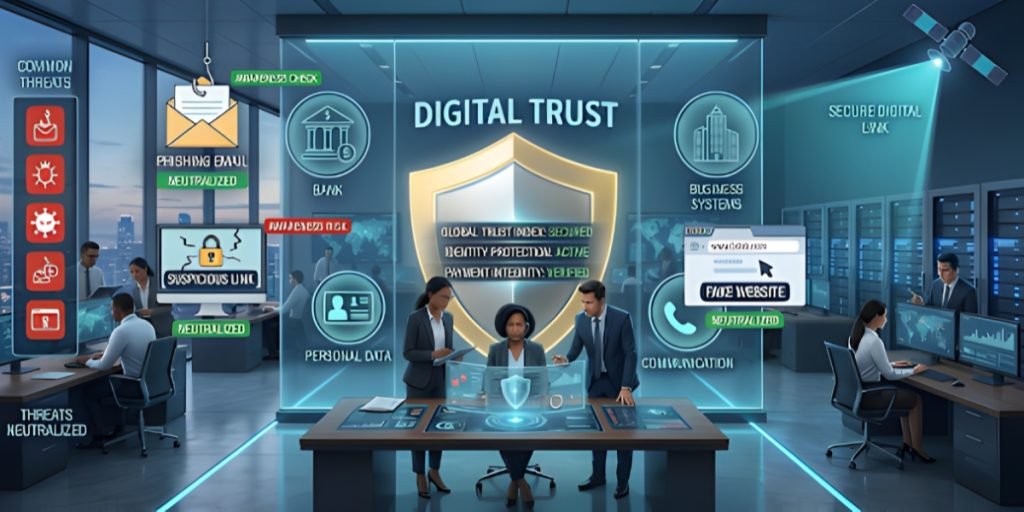
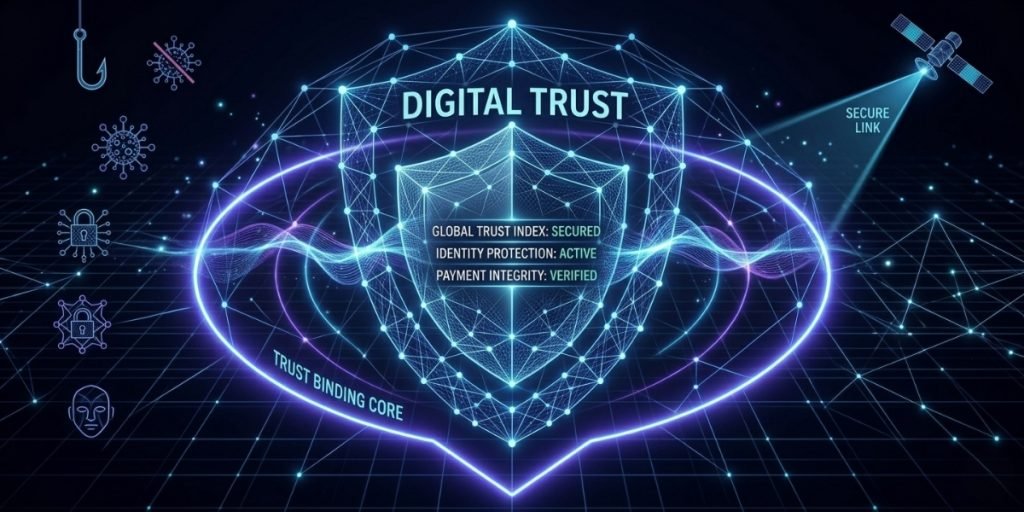
In today’s rapidly evolving digital world, cybersecurity has become the foundation of trust between individuals, organizations and technology. Every online interaction whether it involves communication, financial transactions, or data sharing relies on the assurance that systems are secure and information is protected. Security is no longer just a technical requirement it is the key factor that transforms digital trust into a real and reliable experience.
Image Caption
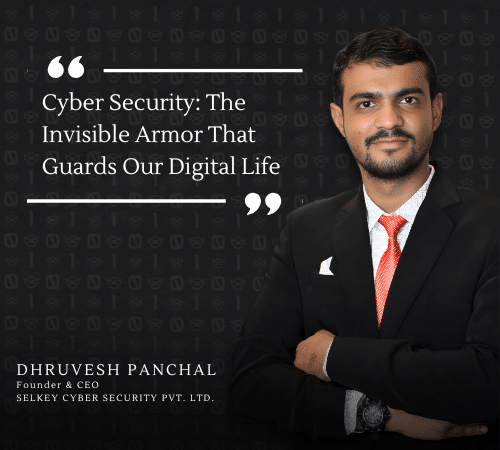
Dhruvesh Panchal, a cybersecurity expert and founder of Selkey Cyber Security Pvt Ltd, has dedicated his journey to strengthening this trust. Beginning his exploration of cybersecurity at the age of 13, Dhruvesh developed a deep understanding of ethical hacking and digital defense. His passion for identifying vulnerabilities and securing digital systems reflects his commitment to protecting people and organizations from cyber threats.
Cybersecurity plays a vital role in building confidence in the digital ecosystem. Without strong security practices, users may hesitate to engage with online services due to fears of data breaches, identity theft, or cyber scams. By implementing advanced security strategies and ethical hacking practices, cybersecurity professionals help organizations identify weaknesses before attackers can exploit them. This proactive approach ensures that digital systems remain safe, reliable, and trustworthy.
Cybersecurity is not just about protecting systems, it’s about protecting the trust people place in the digital world.
Beyond technical solutions, awareness and education are equally important components of digital security. Dhruvesh Panchal actively conducts cybersecurity seminars and awareness programs, particularly for students and young internet users. These initiatives aim to teach individuals how to recognize cyber threats, avoid online scams, and practice responsible digital behavior. By empowering the next generation with cybersecurity knowledge, he helps create a more secure digital society.
Cybersecurity also plays a critical role in solving cybercrime cases and preventing future attacks. Through careful analysis of vulnerabilities and attack patterns, experts can detect threats early and protect systems from potential breaches. This continuous effort strengthens the digital infrastructure and builds confidence among users who rely on technology in their daily lives.
As technology continues to advance, the importance of cybersecurity will only grow. Organizations, governments, and individuals must work together to promote digital safety and implement effective security practices. Leaders like Dhruvesh Panchal demonstrate how dedication, knowledge, and awareness can turn cybersecurity into a powerful tool for protecting the digital world.
Ultimately, security is what transforms technology from a potential risk into a trusted platform for innovation and growth. When systems are protected and users feel safe, digital trust becomes a reality allowing society to move forward confidently in the connected world.
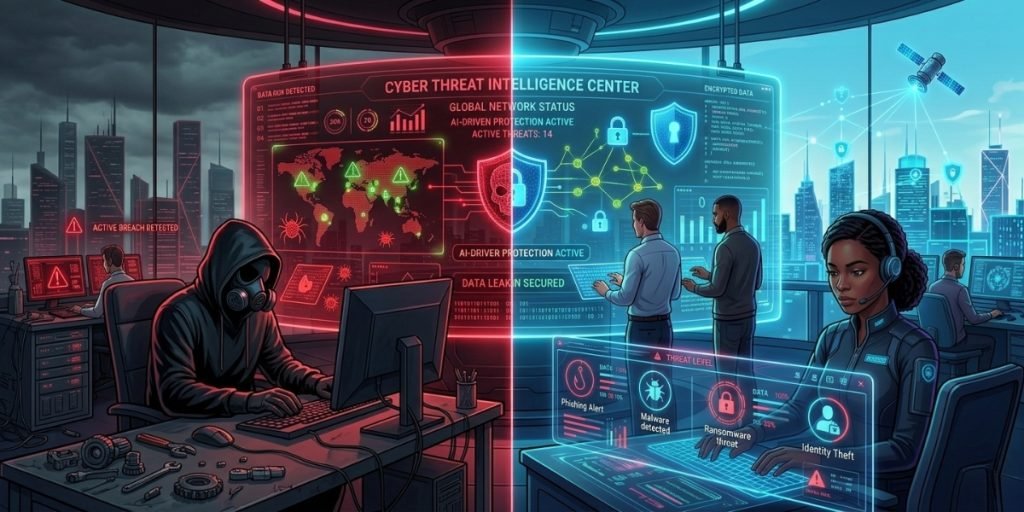
Our lives are deeply integrated with digital technology. From communication and banking to education and business, the internet has become an essential part of everyday life. While digital transformation has created countless opportunities, it has also introduced new security risks. Cybersecurity plays a vital role in protecting our digital lives and ensuring that technology remains safe and trustworthy.
Cybersecurity professionals work to protect digital systems and identify vulnerabilities before attackers can exploit them. Their responsibilities include monitoring networks, testing system security, and responding to cyber incidents.
Experts like Dhruvesh Panchal, founder of Selkey Cyber Security Pvt Ltd, focus on strengthening digital security while promoting cyber awareness among individuals and organizations. Through ethical hacking and security analysis, experts help build safer digital environments.
Common Threats to Digital Lives
Cyber threats continue to evolve as technology advances. Understanding these risks helps individuals and organizations stay prepared.
Some of the most common cyber threats include:
Phishing attacks that trick users into revealing personal information
Malware and ransomware that damage or lock digital systems
Identity theft through stolen personal data
Social engineering attacks targeting human behavior rather than technology
Awareness of these threats is the first step toward preventing them.
Cyber Awareness and Education
Technology alone cannot eliminate cyber risks. Education and awareness play a critical role in protecting digital lives.
Cyber awareness programs help people:
Recognize suspicious online activities
Avoid phishing emails and fake websites
Protect their personal data and accounts
Use digital platforms responsibly
By educating individuals, cybersecurity professionals empower people to become the first line of defense against cyber threats.
Protecting the Future of Digital Society
As technology continues to evolve, cybersecurity will remain a key component of digital progress. Governments, organizations, and individuals must work together to create a secure digital environment.
Steps toward a safer digital future include:
Promoting cybersecurity education
Encouraging ethical hacking and vulnerability testing
Strengthening security policies and technologies
Raising awareness about online safety
A secure digital world ensures that technology continues to improve lives without compromising safety.
Conclusion
Cybersecurity is the foundation that protects our digital lives. By combining advanced security technologies, ethical hacking practices, and widespread awareness, we can create a digital ecosystem that people can trust. As the digital world grows, maintaining strong cybersecurity will remain essential for protecting individuals, organizations, and future generations.
In the modern digital age, trust is one of the most valuable assets in the online world. People share personal data, perform financial transactions, communicate, and manage businesses through digital platforms. However, this trust can only exist when strong security measures protect users and their information. Security plays a crucial role in transforming digital trust into a real and reliable experience.
The Meaning of Digital Trust
Digital trust refers to the confidence users have when interacting with online platforms, systems, and services.
When security systems are strong, people are more willing to engage with technology and digital services.
Why Security Is Essential in the Digital World
Without proper security, digital systems become vulnerable to cyber threats. Cybercriminals constantly attempt to exploit weaknesses in networks, software, and human behavior.
Security helps by:
Protecting sensitive information from unauthorized access
Preventing cyber attacks and system breaches
Maintaining the integrity of digital services
Ensuring safe communication and transactions
Strong security frameworks create a safe environment where digital trust can thrive.
The Growing Threat of Cybercrime
As technology advances, cyber threats are becoming more sophisticated. Hackers use various techniques to steal data, disrupt services, or exploit system vulnerabilities.
Common cyber threats include:
Phishing attacks targeting personal credentials
Malware that damages or controls devices
Ransomware attacks that lock critical data
Identity theft and financial fraud
Cybersecurity measures are essential to protect users and maintain digital trust in the online ecosystem.
Cyber Awareness and Education
Security is not only about technology; it also involves educating people about digital risks and safe online behavior.
Cyber awareness helps individuals:
Recognize online scams and phishing attacks
Use strong passwords and security tools
Protect their personal and financial information
Understand the importance of responsible internet usage
Educating users is a powerful step toward building a safer digital environment.
Building a Future Based on Digital Security
The future of digital technology depends on secure systems and informed users. As more services move online, security must remain a top priority for individuals, organizations, and governments.
To strengthen digital trust, it is important to:
Invest in cybersecurity technologies
Promote cyber awareness programs
Encourage ethical hacking and security research
Develop stronger digital protection policies
When security becomes a priority, digital trust transforms into real-life confidence in technology.
Conclusion
Security is the foundation that converts digital trust into reality. In a world where technology connects billions of people, strong cybersecurity ensures that digital interactions remain safe, reliable, and trustworthy. By combining advanced security practices with education and awareness, we can build a digital future where trust and safety go hand in hand.
Cyber security is the practice of protecting computer systems, networks, and digital information from cyber threats and unauthorized access. In today’s digital world, people rely heavily on technology for communication, banking, education, business operations, and social interaction. As the internet becomes more integrated into everyday life, the need for strong cyber security has become increasingly important. Without proper security measures, sensitive information and digital systems can become vulnerable to cyber attacks and malicious activities.
One of the primary goals of cyber security is to protect sensitive data such as personal information, financial records, and confidential business data. Cybercriminals often attempt to steal or manipulate this information through hacking, phishing attacks, malware, or other cyber threats. By implementing strong security systems like encryption, firewalls, and multi-factor authentication, organizations and individuals can reduce the risk of data breaches and protect valuable information.
Cyber security also plays a crucial role in maintaining trust in digital services. People use online platforms for banking, shopping, and communication, expecting their data to remain safe and secure. When companies invest in strong security systems, it builds confidence among users and ensures that digital services remain reliable. This trust is essential for the growth of online businesses and digital platforms.
The strongest defense in the digital world is awareness, knowledge and responsible technology use.
Another important aspect of cyber security is protecting organizations from financial and operational damage. A successful cyber attack can disrupt business operations, damage reputation, and lead to significant financial losses. Companies must continuously monitor their systems, update software, and implement security policies to prevent cyber threats from affecting their operations.
Cyber security professionals play a vital role in defending digital systems against cybercrime. These experts use advanced tools and techniques to detect vulnerabilities, analyze threats, and secure networks from potential attacks. Ethical hackers, also known as security researchers, help organizations identify weaknesses in their systems before cybercriminals can exploit them.
Awareness and education are also key components of cyber security. Many cyber attacks succeed because users are unaware of basic security practices. Teaching individuals how to recognize phishing emails, avoid suspicious links, and use strong passwords can significantly reduce the risk of cyber threats. Cyber awareness programs and seminars help people understand how to protect themselves in the digital environment.
With the rapid growth of technology, cyber threats continue to evolve and become more sophisticated. As a result, cyber security must constantly adapt to new challenges. Governments, organizations, and individuals must work together to strengthen digital defenses and promote responsible internet usage.
In conclusion, cyber security is essential for protecting digital systems, safeguarding personal information, and maintaining trust in the online world. By combining advanced technology, security expertise, and public awareness, we can create a safer digital environment where people can confidently interact, communicate, and conduct business online.